Clippings, mulch and turf are not just rubbish in south east Queensland. They are regulated material inside a fire ant biosecurity zone, and there are rules about how they move.
The short version
- Fire ant biosecurity zones cover soil, mulch, hay, manure, quarry products, turf and potted plants. They apply to your address whether or not you have ever seen a fire ant.
- Under the Biosecurity Regulation 2016 you must use fire ant safe practices when moving or disposing of organic material inside a zone, or hold a permit.
- The zones are reviewed and updated monthly, so check the current map rather than relying on where a boundary used to run.
- The Brisbane green bin is collected fortnightly, and items must be under 10 cm in diameter and 75 cm long with the lid closed.
- Clippings left on the lawn are not being moved, so they are the simplest answer of all, and they are better for the grass through the dry months.
Green waste in Brisbane is a regulated material
Most people think of grass clippings and hedge trimmings as rubbish. In south east Queensland they are something more specific than that: organic material inside a fire ant biosecurity zone, and there are rules about how it moves.
The National Fire Ant Eradication Program runs those zones. They cover material that can carry fire ants, which means soil, mulch, hay, manure, quarry products, turf and potted plants, and they apply to anyone living or working inside them. You do not have to have seen a fire ant. The zone applies to the address, not to the sighting.
Under the Biosecurity Regulation 2016 you have to use fire ant safe practices when you move or dispose of organic material inside a zone, and if you cannot, you need a biosecurity instrument permit. Business Queensland sets out the restrictions on moving plant material and soil within Queensland. Penalties can apply to individuals as well as businesses.
Why this lands on a mowing job specifically
A mow generates exactly the kind of material the rules are written about, and then somebody drives it to another address.
That is the part that matters. Clippings that stay on the lawn are not going anywhere. Clippings loaded into a trailer and taken across a suburb boundary are being moved, and how that is done is what the controls cover.
It is the single reason we handle green waste removal as a defined part of the job rather than an afterthought. The material has to leave the property, and it has to leave it correctly.
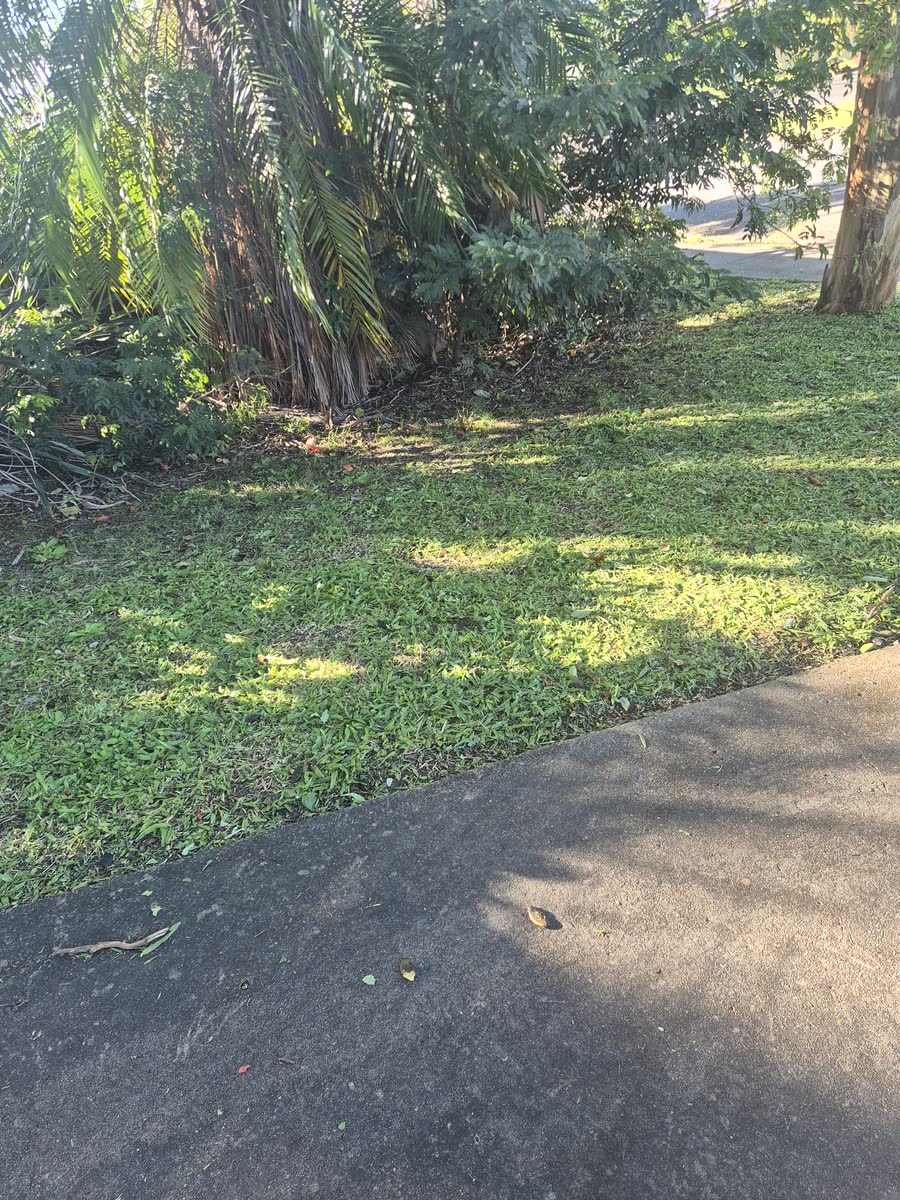
What the council bin will and will not take
Plenty of households manage their own green waste through the kerbside bin, and for a small yard that is a perfectly sensible answer. It just has limits, and they are tighter than people assume.
Fortnightly, and only that
The Brisbane City Council green waste service runs the green bin every fortnight, alternating with the yellow lid bin. That cadence is the real constraint. It is fine for a lawn on a monthly winter interval. It is nowhere near enough through February, when the same lawn is being cut weekly and each cut is bigger than the one before.
Ten centimetres, and 75 long
There are size limits on what goes in. Items must be no larger than 10 centimetres in diameter and 75 centimetres in length, and the lid has to close. Grass clippings are never the problem there. Hedge prunings and branch material regularly are.
If you have had a hedge taken back hard, or a shrub removed, the volume and the length both put it outside what the bin is for. That material needs a trailer, not a wheelie bin.
The zones move, so do not memorise them
This is the part worth knowing if you only remember one thing from this page.
The biosecurity zones are reviewed and updated monthly, to line up with interstate plant quarantine zones and to reflect the latest detections. A boundary that ran one way last year may not run the same way now.
So there is no fixed answer to give you about which zone Mount Gravatt or Carindale sits in that will still be right in six months. The honest advice is to check the current map on the program's own movement controls guide before moving any quantity of soil, mulch or turf yourself, rather than relying on what somebody told you last season.
What fire ant safe practice looks like in a suburban yard
For a household, the practical version of this is short.
Grass clippings
Clippings left on the lawn where they were cut are not being moved and are not a problem. This is the easiest compliance decision available and it is also better for the lawn through the dry months, because the clippings shade the soil while they break down.
Soil, turf and mulch
These are the materials the controls are really aimed at, because they carry nests rather than just plant matter. Bringing in a load of soil or laying new turf is where a household is most likely to move fire ants without knowing it. Buy from a supplier who can tell you how they comply, and do not accept a trailer load of unknown fill from a friend across town.
And for anything leaving the property, somebody has to be handling it correctly at both ends. That is a reasonable question to ask whoever is taking it away, and the answer should not be vague.
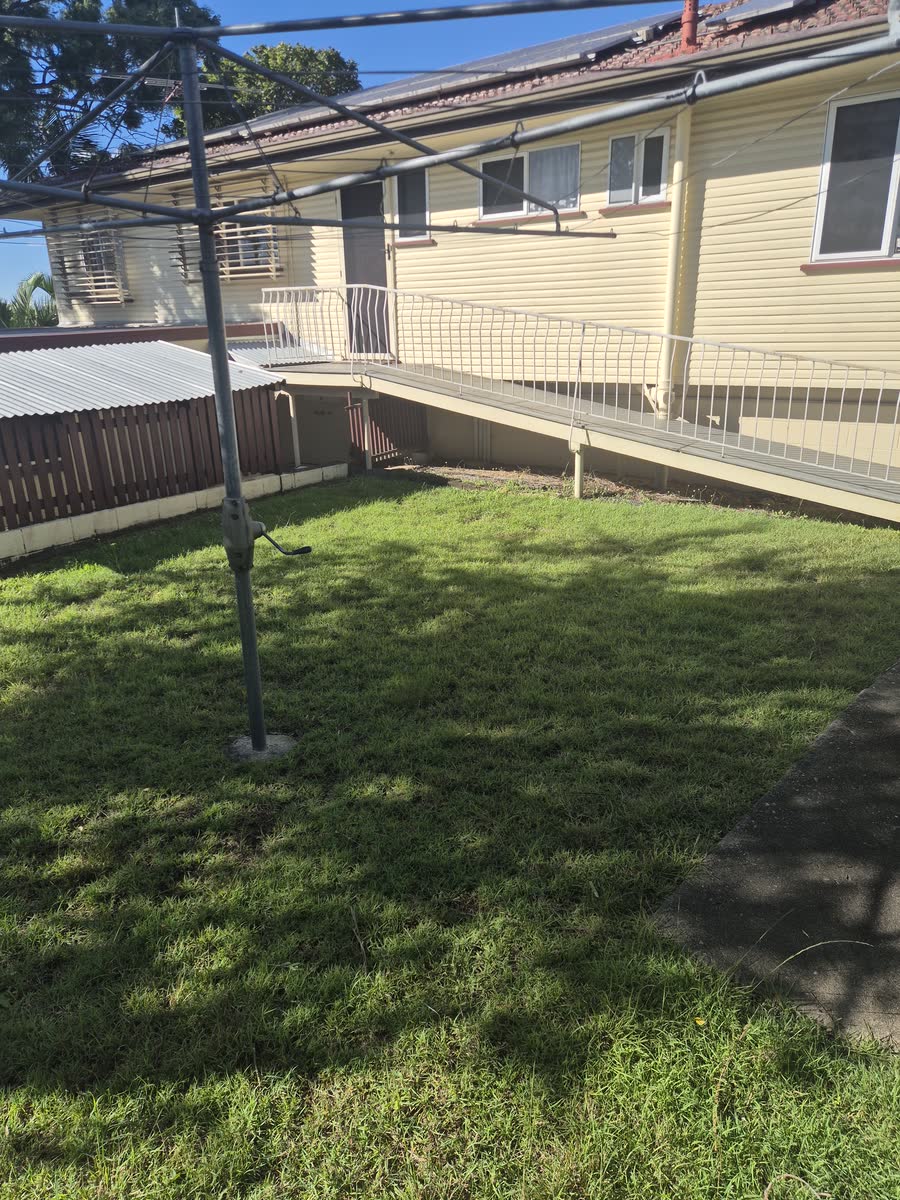
Why a lawn is the place they turn up
It helps to understand why turf and lawns come up so often in the rules, rather than it seeming like red tape attached to the wrong thing.
Fire ants build in open, sunny, disturbed ground. A suburban back lawn is close to ideal for them: warm, mown short so the sun reaches the soil, watered through summer, and regularly turned over at the edges. They are not a bush pest that occasionally wanders into town. Lawns are the habitat.
They also spread in ways that have nothing to do with walking. A colony moved inside a pallet of turf, a load of soil or a heap of mulch travels as far as the truck does, which is why the controls sit on the material rather than on the insect. Stopping a nest from crossing a suburb is a great deal easier than finding it once it has.
The sting is the reason anyone cares. It is genuinely painful, it comes from a large number of ants at once because they swarm when a nest is disturbed, and a lawn is exactly where children and pets are. A mower wheel over a nest is the classic way people find out they have one.
The stockpile problem
The most common thing we see in a back yard is not a compliance breach. It is a heap.
How it starts
The green bin fills up in week one of the fortnight. The rest goes behind the shed with the intention of dealing with it later. Later arrives, the bin is full again, and the heap grows. By March there is a pile of grass and prunings that has been sitting warm and damp for three months.
Why it gets worse rather than staying still
A pile like that is warm, moist and undisturbed, which makes it attractive to a lot more than fire ants. It also kills the lawn underneath it, so removing it in autumn leaves a bare patch that will not knit back over until the following spring, because by then the growing season is done.
And the longer it sits the harder it is to move. Fresh clippings load in minutes. A three month heap is heavy, matted and has to be dug out.
Clearing that is a normal part of a first garden maintenance visit, and it is usually cheaper than people expect, because the awkward part is access rather than volume.
Composting is an option, with a caveat
A compost bay handles clippings well and keeps them on the property, which sidesteps the movement question entirely. It works best when grass is layered with something drier and coarser rather than tipped in on its own, because a bay of nothing but wet clippings compacts and goes sour instead of breaking down.
The caveat is what you put into it and what you take out. Bringing in manure or purchased soil to get a heap going, or giving finished compost to somebody in another suburb, both put you back into the same set of movement rules the clippings avoided.
How we handle it
On a standard lawn mowing visit, clippings usually stay on the lawn. It is better for the grass and it keeps material out of the system entirely.
When a cut is too heavy to leave, or the job is hedge trimming or a garden maintenance clean up, the material comes with us. That is priced into the job rather than being a surprise at the end, and it is why the quote form asks how much green waste you have before it asks anything else.
It is also why we ask about access. A trailer load coming out of a back yard in Upper Mount Gravatt through a narrow side gate is a different job to one that can be loaded from a driveway, and pretending otherwise is how quotes get wrong.
Where to start
If you are managing your own green waste and it fits in the bin every fortnight, keep doing that. It is the cheapest and simplest option available to you.
If you are running out of bin space through summer, stockpiling behind the shed, or planning to shift soil or turf around, that is the point to hand it over. We cover Carindale, Mount Gravatt, Upper Mount Gravatt and Sunnybank. Tell us what you have and we will tell you what it takes to shift it.